
The video is in Georgian.
Course Description:
Schedule: Tuesday, Thursday 20:00–22:00 (Tbilisi time, GMT+4)
Course Objective:
- To teach students how to administer and operate Linux systems
- System configuration, user management, file systems, processes
- Scripting, network configuration and working with core services
- To prepare students to earn the international LPIC-1 certificate
Course Concept:
- Participants will study the structure of the Linux system in depth
- Most of the course is hands-on: participants will work in terminals and solve assigned tasks using the command line
- The course will cover sample tasks similar to those in the LPIC-1 certification exams
- Students will receive exercises after every lecture
- In addition to the lectures, students need to devote a lot of time to independent practical work
Tools and Minimum Requirements:
Basic knowledge of how a computer works, and knowledge of the basic commands for managing operating systems and files.
Basic networking knowledge — IP addresses, DNS, minimal network configuration.
Ideally, students should have at least enough technical English to understand English-language literature.
No specific prior certifications are required to take the course.
Tests and Exam:
- At every lecture, participants will be given exercises to check how well they have understood each topic (non-graded component, in English)
- At the end of the course, students will take a “mock exam” designed to be as close as possible to the real certification exam (graded component, in English)
Course Curriculum:
- System Architecture
- Understanding hardware settings
- Boot process and runlevels
- Changing runlevels and shutting down/rebooting the system
- Linux Installation and Package Management
- Installing Linux from various media
- Managing packages with RPM, DEB, and other package managers
- Updating and removing software packages
- GNU and Unix Commands
- File management, text processing, and basic shell commands
- Working with command-line tools
- Input/output redirection and pipes
- Devices, Linux Filesystems, and Filesystem Hierarchy
- Creating, mounting, and unmounting filesystems
- Managing partitions, swap, and disk quotas
- Understanding FHS (Filesystem Hierarchy Standard)
- Shells, Scripting, and Data Management
- Using Bash and other shells
- Writing simple shell scripts
- Variables, loops, and conditional statements
- User Interfaces and Desktops
- Administrative Tasks
- Managing users and groups
- Automating tasks using cron and at
- Logging and system monitoring
- Essential System Services
- Managing system time and scheduling tasks
- Basic networking (IP configuration, hostnames, DNS, SSH)
- Networking Fundamentals
- Understanding TCP/IP, routing, and network interfaces
- Configuring static and dynamic IP addresses
- Network troubleshooting commands (ping, netstat, traceroute)
- Security
- Basic file permissions and ownership
- Using sudo and root privileges
Detailed syllabus (PDF, in Georgian)
What Will You Know and Be Able to Do After the Course?
- Setting up/configuring various Linux distributions, managing software packages and updating the system
- File systems — creating and deleting files, configuring permissions, managing disks
- Users and groups — creating new users/groups, assigning passwords and permissions
- Using the command line (CLI) effectively — searching for files, processing text files, filters, automated task execution, writing scripts
- Process and system monitoring — managing processes, checking log files, monitoring the system
- Basic network configuration — managing IP addresses, diagnosing network problems, using SSH and other network services
- Services — installing, configuring and managing core system services (daemons)
- Security — assigning access permissions, making backups
About the Instructor:
Archil Elizbarashvili — IT manager, Linux systems administrator and trainer.
Archil has 20+ years of experience teaching Linux systems and is still actively teaching.
Courses taught:
- Introduction to GNU/Linux Systems
- Scripting Languages
- Advanced Linux Course, Networking
- Intensive LPIC-1 Certification Preparation Course
Archil's experience includes working at the following universities and educational institutions: TSU (Tbilisi State University), BTU (Business and Technology University), GTU (Georgian Technical University), European University (Georgia), Technical University of Sofia (Bulgaria), University of Paris 8, INSA Rennes (National Institute of Applied Sciences of Rennes), Catholic University of Lille (France), Rzeszów University of Technology (Poland), Kiel University of Applied Sciences (Germany), and the vocational institutes IES de TEIS (Vigo), CPiFP and Los Enlaces (Zaragoza) (Spain).
Archil is also the author of the e-book “Introduction to GNU/Linux Systems.”
Contact Us
Fill out the form or email us at info@sky21.net
Course Instructor
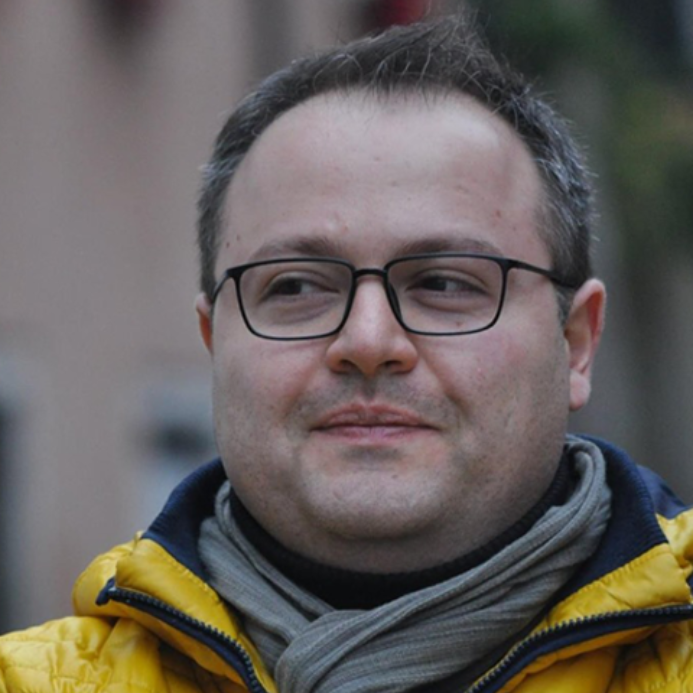
Archil Elizbarashvili
LPIC CertifiedTSU, BTU
- Linux Administrator 25+ yrs
- IT Manager 16+ yrs
- Lecturer 20+ yrs